Builder at the intersection of computing, physics, and scalable education systems.
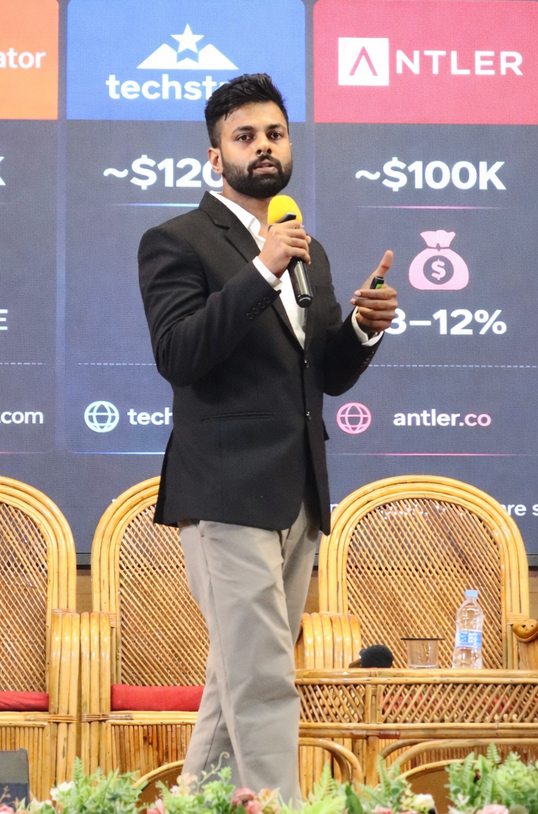
I build systems at the intersection of computing, physics, and education — designed to work in the real world and scale with clarity.
My background spans computational physics, advanced computing, enterprise technical operations, and years of teaching physics and programming across India and the Middle East. Across these roles, one principle has remained constant: complex systems must be engineered into simple, reliable solutions.
I began my career as a technical support agent at AT&T ConnecTech, diagnosing and resolving technical issues for customers across the United States. This experience shaped my approach to root-cause analysis, durable solution design, and execution under pressure.
At NIT, I focused on computational physics and advanced computing. Teaching later refined another key skill — translating deep concepts into clear and structured knowledge.
Today, I design AI-driven training and operational platforms through Hexagon Know, building systems that automate learning, improve workflows, and scale knowledge across organizations.

Leading the development of HK Skill, an AI-powered workforce development platform, focusing on product development and interactive learning simulations.
Managed curriculum development, content creation, and quality control, enhancing engagement for students across India.
Provided remote support and assistance to the customers of AT&T Connec-Tech.

Specialized in computational physics, quantum computing, and solved the Archimedes’ Cattle Problem with a 206,545-digit solution.
Trained in mathematical physics and numerical programming; served as Chief Editor for the college magazine.
Completed Higher Secondary Education, specializing in computer science, C++ programming and database management systems.
Explored and solved in 2017 during my Master's in Physics at VNIT Nagpur
Some problems arrive quietly from antiquity.
The Archimedes Cattle Problem begins as poetry — a riddle about herds grazing beneath Sicilian sun — yet beneath verse lies stubborn arithmetic.
Following its trail is to walk a path already touched by giants.
In distance stands Fermat, asking questions that refuse to die.
Further along waits Pell, whose equations stretch numbers into astronomical magnitudes.
From India echoes Bhaskara, and elegant rhythm of Chakravala method, solving what seems impossible through cyclic reasoning.
And somewhere in mist stands Ramanujan, reminding us that numbers often reveal themselves only to those willing to listen carefully.
The riddle slowly sheds its pastoral disguise and becomes what it truly is:
a towering system of Diophantine constraints, spiraling through Pell-type relations until smallest valid solution erupts into a number of extraordinary scale.
The final answer stretches to roughly 7.7 × 10206544 —
a number occupying 206,545 digits.
Far beyond reach of ordinary intuition.
And yet, on a modest laptop, a small C++ program patiently assembled those digits one by one —
not through brute force, but through structure, number theory, and persistence.
In end, achievement was never number itself.
It was realization that across centuries —
from Archimedes to Bhaskara to Fermat to Ramanujan —
language of mathematics has remained unchanged:
clarity, patience, and stubborn refusal to abandon a beautiful problem.